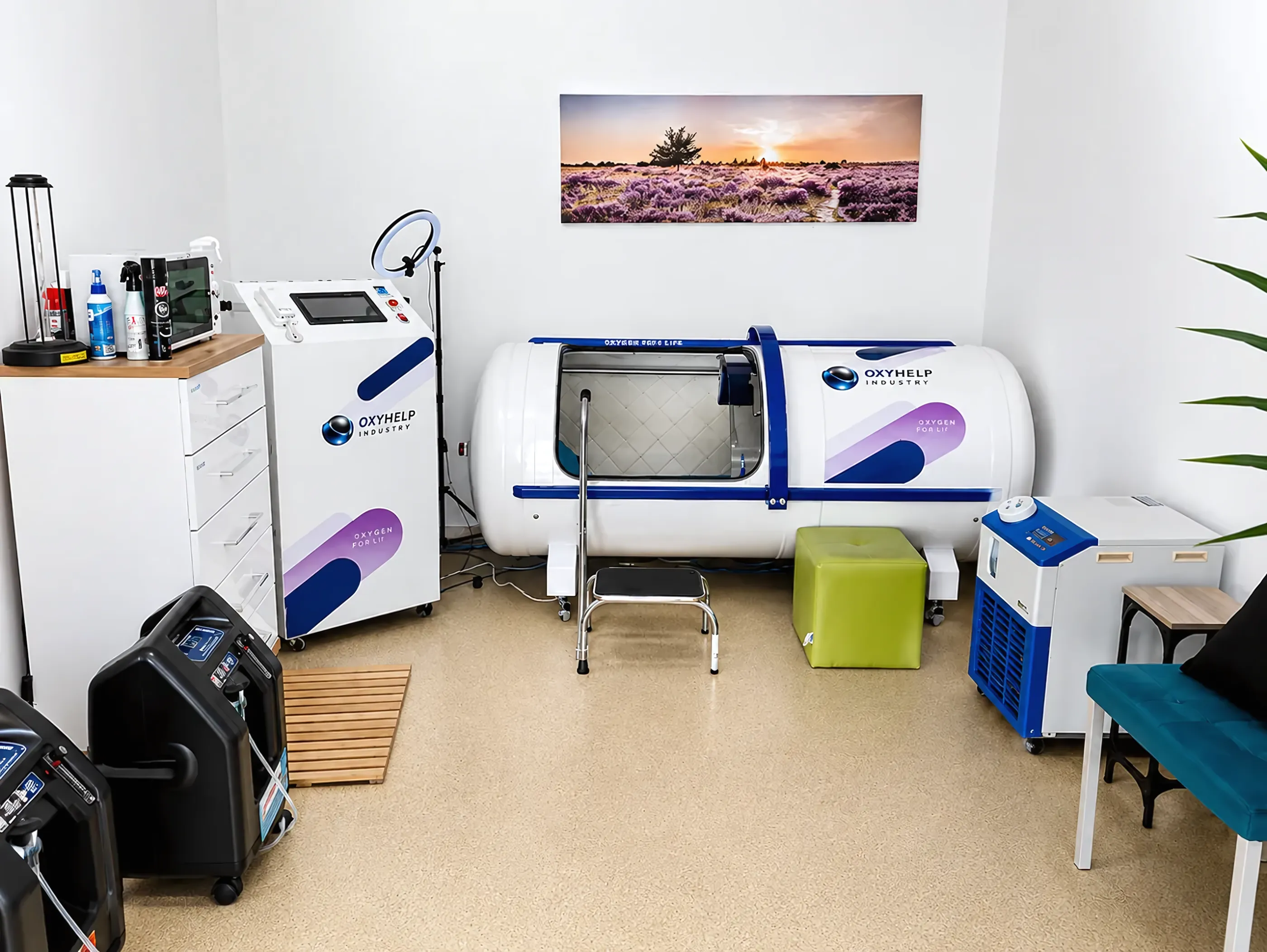
Regeneration at2 bar ofhyperbaric oxygenation.
Oxyhelp® monoplace hyperbaric chamber: hyperbaric oxygenation at 2 bar for skin rejuvenation, recovery after aesthetic surgery, anti-aging and cognitive boost.
Hyperbaric Therapy · clinical protocol with visible results.
Hyperbaric therapy (HBOT) accelerates healing, cellular regeneration and physical recovery through deep oxygenation at controlled pressure.
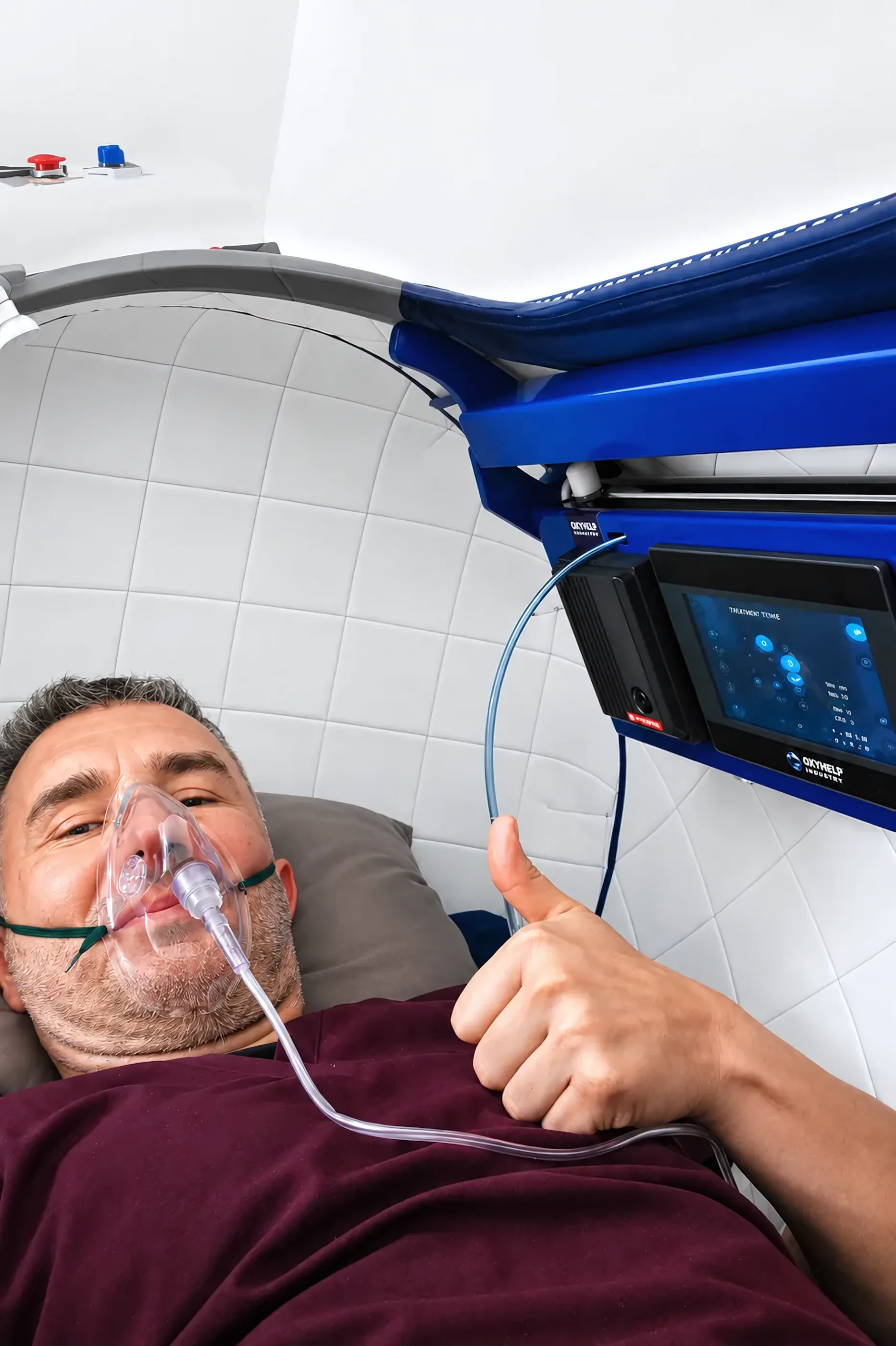
What you get.
- Conditions and physical recovery · support in chronic, rheumatic and post-traumatic conditions, Lyme disease and other pathologies
- Skin rejuvenation · deep stimulation of collagen production
- Accelerated recovery after aesthetic surgery · reduced post-operative oedema
- Activation of CD34+ stem cells (8 times vs. sea level)
- Athletic recovery · lactic acid clearance · healing of micro-injuries
- Neuro-optimisation · combating brain fog · support for neuroplasticity
Transparent pricing.
The full Hyperbaric Therapy price list, with the free initial assessment included, lives on the prices page. Packages are valid for 6 months from the first session.
Direct answers.
The questions we get asked most about this treatment. Have another? Message us on WhatsApp.
Inside the pressurised chamber you breathe an oxygen-enriched atmosphere at 2 bar (the equivalent of the pressure at 10 m underwater). At this pressure, according to Henry's Law, oxygen dissolves directly into the blood plasma and reaches tissues with reduced vascularisation, where red blood cells cannot transport it on their own. The mechanism triggers angiogenesis (the formation of new vessels), CD34+ stem cell mobilisation, reduced inflammation and the activation of repair genes.
For skin rejuvenation, recovery after aesthetic surgery, chronic fatigue syndrome, cognitive and energy optimisation, athletic recovery (lactic acid clearance, micro-injuries, joints), support in chronic wounds / diabetic ulcers, post-stroke recovery, orthopaedic trauma (fractures, muscle tears, ligament injuries), neurological fatigue, and severe infections (soft tissue, osteomyelitis) as a complementary treatment. It is used by professional athletes too, but most clients are people who want deep regeneration and anti-aging.
By category: (1) chronic wounds and diabetic ulcers: increased tissue oxygenation, stimulation of new vessels, accelerated regeneration; (2) severe infections as a complementary treatment: soft tissue, osteomyelitis, gangrene; (3) post-operative recovery: it accelerates healing and reduces inflammation and the risk of local complications; (4) orthopaedic recovery: fractures, muscle tears, ligament injuries, sports trauma; (5) neurological conditions: post-stroke support, head trauma, neurological fatigue; (6) circulatory conditions: improved microcirculation and local oxygenation; (7) athletic recovery: reduced muscle inflammation, increased oxygenation. Always as a complementary method, it does not replace standard medical treatment.
It depends on the goal: 10 sessions for reset and vitality (metabolic rebalancing, sleep, cellular protection); 20 sessions for recovery after surgery or intense effort and visible anti-aging support; 40+ sessions for structural support on bone and joints or for extended therapeutic protocols. We recommend a minimum of 5 hours to notice benefits. According to the medical literature, results depend on the type of condition and the protocol used.
Pressures of 2.0–3.0 bar belong to diving medicine (crushing nitrogen bubbles). For regeneration, neurological recovery and anti-aging, 2.0 ATA is the optimal point, demonstrated by the elite centres in Israel (Sagol Center, Efrati et al., Shamir) and the USA. At 2.0 ATA you reach the partial pressure needed to mobilise CD34+ stem cells 8 times more than at sea level, and you reach ~4.2 ml O₂ per 100 ml of plasma. At 3.0 ATA, the additional pressure increase does not bring a linear stem-cell mobilisation, but it causes lipid peroxidation, severe reactive vasoconstriction (which can close the capillaries and reduce oxygen delivery to the lesion) and exponentially increases the risk of hyperoxic seizures (the Paul Bert effect). In the USA, 3.0 ATA is reserved almost exclusively for emergencies, such as decompression accidents.
1) Preparation and acclimatisation: you enter the chamber in light cotton clothing. 2) Gradual compression: pressure is applied in 3 intensity steps, never abruptly, to protect the eardrum and sinuses. 3) Maintenance therapy: at 2.0 ATA, oxygen dissolves into the plasma; it lasts between 60 and 180 minutes. 4) Controlled decompression: a slow return to atmospheric pressure, to let the vessels and lungs readjust, preventing barometric 'shock'. Throughout, you can listen to music, watch a film, work or sleep. Staff remain in constant verbal contact.
An Oxyhelp® monoplace chamber + 2 AirSep Intensity concentrators. Maximum capacity is 10 l/min per unit, but we run them at 7 l/min for a total flow of 14 l/min, double the average adult respiratory requirement (~7 l/min). This way, the purity of the delivered oxygen stays stable between 93% and 96% throughout the session (sources claiming '100%' are not technically accurate for on-site concentrators). Protocol bonus: a chamber actively sterilised with UV light (imported as a standard from Israel/USA) and silver nano-ion filters with antibacterial/antiviral action. The concentrators are replaced at 15,000 hours (versus the 20,000–30,000 hours guaranteed); the filters are replaced monthly (versus the 3-month standard).
A PubMed analysis assessed more than 620 scientific articles on hyperbaric therapy. The research indicates increased tissue oxygenation, stimulation of angiogenesis (the formation of new vessels) and support for cellular regeneration. The clinical documentation attests to an increase of up to 8 times in circulating stem cells after a complete protocol (Thom et al., Journal of Applied Physiology). Studies from the Sagol Center (Efrati et al., Israel) demonstrate benefits in neurological recovery with the 2.0 ATA protocol. Results depend on the medical indication and the protocol used. It is a complementary method, not a substitute for standard medical treatment.
The Oxyhelp chamber is transparent and spacious, with a large viewport, so most clients report no discomfort. During the session you can listen to music, watch a film or sleep. Staff remain in verbal contact throughout. For severe claustrophobia, acclimatisation is done gradually in short sessions.
Absolute (the therapy is forbidden): untreated pneumothorax; certain active chemotherapies (Doxorubicin, Cisplatin, Bleomycin). Relative (require medical approval / prior evaluation): severe colds, sinusitis or nasal congestion (which make equalisation harder); recent ear surgery or eardrum trauma; pregnancy (avoided except for major emergencies such as CO poisoning); severe claustrophobia (requires acclimatisation); pacemaker or implants (we check the manufacturer's specifications). For any doubts, we offer prior telephone consultancy with our team.
The sensation is similar to that of an aeroplane flight: in the first few minutes, a slight pressure in the ears, easily managed with the equalisation manoeuvres we explain at reception. The procedure is non-invasive and most patients tolerate it very well. Yes, you have full freedom: you can listen to music, watch a film or work. You dress in light cotton clothing. Sessions are 60, 90, 120 or 180 minutes. There is no age limit.
Packs of 5–10 hours are valid for 30 days from the first session. Packs of 20–40 hours are valid for 90 days. Payment is made after the first session; the amount is non-refundable once the first session has been performed. For concrete results, most protocols call for a minimum of 10 sessions. See the full list of HBOT prices.
Start with an individual evaluation.
Find us at Calea Turzii 137A, right by the Sigma roundabout in Cluj-Napoca. Bookings by phone or WhatsApp; the initial evaluation is free and shapes the right plan for your goal.